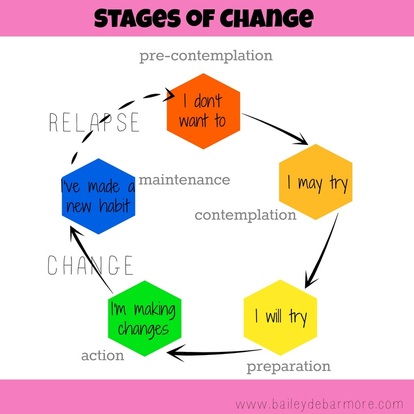
- Precontemplation - this stage there is no thought or urge to even entertain the thought of quitting substances. In this stage you as a counselor will have to roll with any resistance you might encounter from clients.
- Contemplation - step 2 is the stage where clients become aware of some of the negative consequences that they are facing due to substance abuse - but they are NOT ready to change yet. Here clients have identified a problem and are only entertaining the though of doing something different.
- Preparation - the "I want to change" stage. Here clients will be seeking change and begin going through proper steps to change. Many clients might skip this stage and go straight to the action step, which mat lead to them relapsing because they are ill prepared. Some preparations include entering rehab facilities, intensive outpatient programs, seeking out counselors, or searching for help from other professionals such as medical doctors or psychologists. This stage prepares clients for sobriety by informing them of the action and maintenance stages they'll be engaging in.
- Action - this is the actual working stage. Going to AA/NA meeting, meeting with helping professionals, changing their social setting, and/or engaging in self-directed behavioral change are just some things you can expect to see from your clients in this stage. In this stage your clients are working to remain sober, you aren't convincing them to not use but instead are strategizing with them healthy social/environmental alternatives so they can remain sober.
- Maintenance - this is where you clients will continue to do what they have learned while in the active phase. Such activities include going to AA meeting, continuing to meet with counselors, continuing to engage in activities that contribute to their sobriety. Its important to note that although AA was noted as an example, this is not a requirement for clients' sobriety, many people get sober without the help of AA or their services.
- In the case of relapse, this process begins all over the again with precontemplation. According to the National Institute on Drug Abuse, approximately 40-60% of all substance abusers relapse, so there is a high possibility that you will have clients that are constantly going through this process. Although this is not always the case and it would not be advised that you approach your clients with this mentality.
Minus the maintenance stage, which ideally should be life long, the stages of change should take a couple of months. As a counselor you should be able to see your clients progressing through the stages - also be mindful that this is not a fluid process. That means that once your clients have to fully complete one stage before moving on to the next, so if your client is looking at detox centers in one session but then continues to use - your client is still in the precontemplation/contemplation stage. Below is a diagram that expresses the stages in a circular manner (incorporating relapse into the change process.)
Here you can hear me further discuss stages of change when dealing with adolescents. Enjoy!